January, 2026.
Systemic Loot, Storage & Build Pipeline: Feature Overview
Vessel Inventory
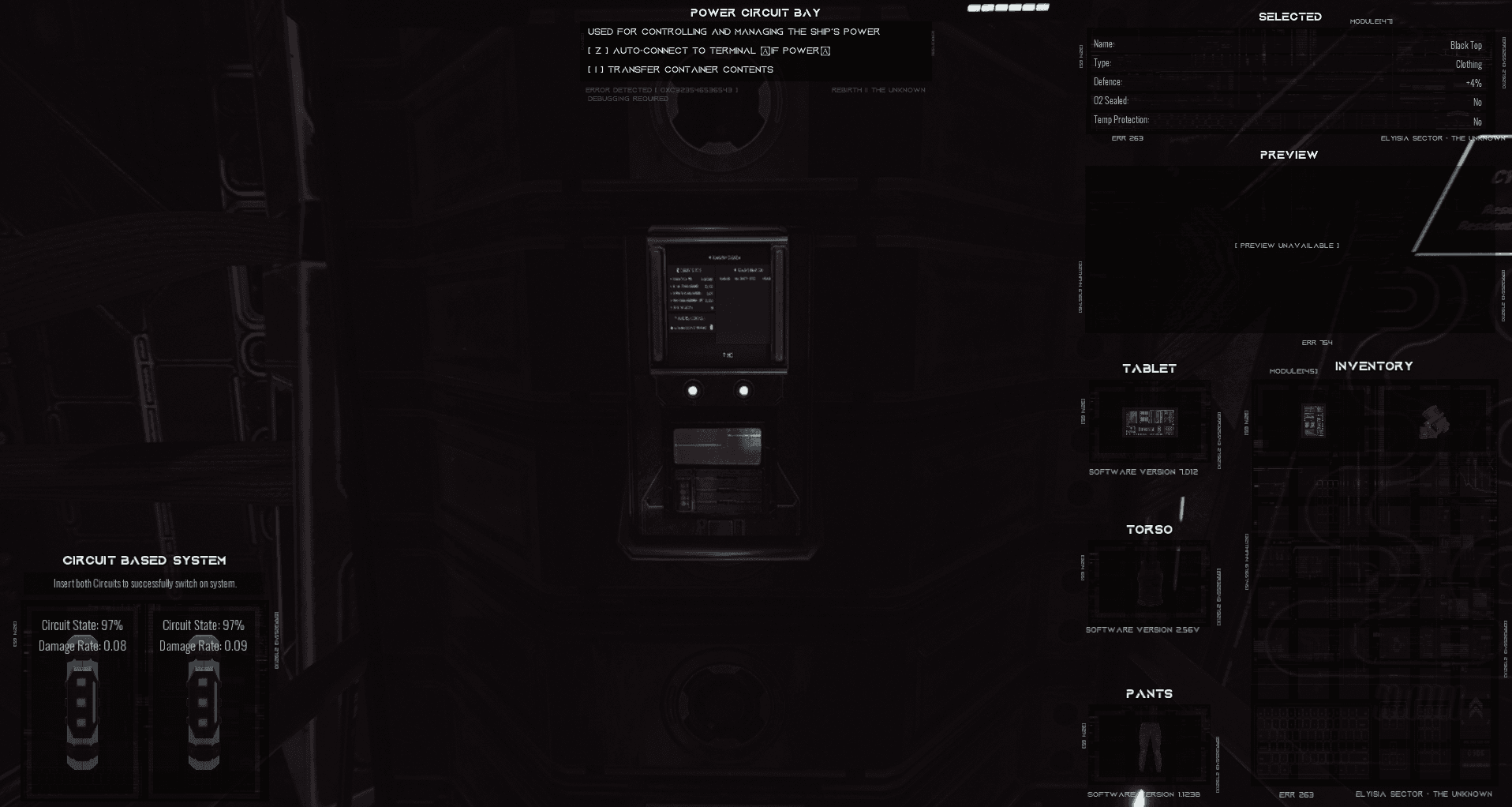
The entire inventory runs on a single unified system that every vessel can access, whether it’s the full HDFC Station or the Crossfire Ship. Each vessel includes devices like the oxygen system, cooling system, power system, and the (currently disabled) weapon, defence, and shield systems. These devices add or remove items dynamically in the background using data only, so no performance impact.
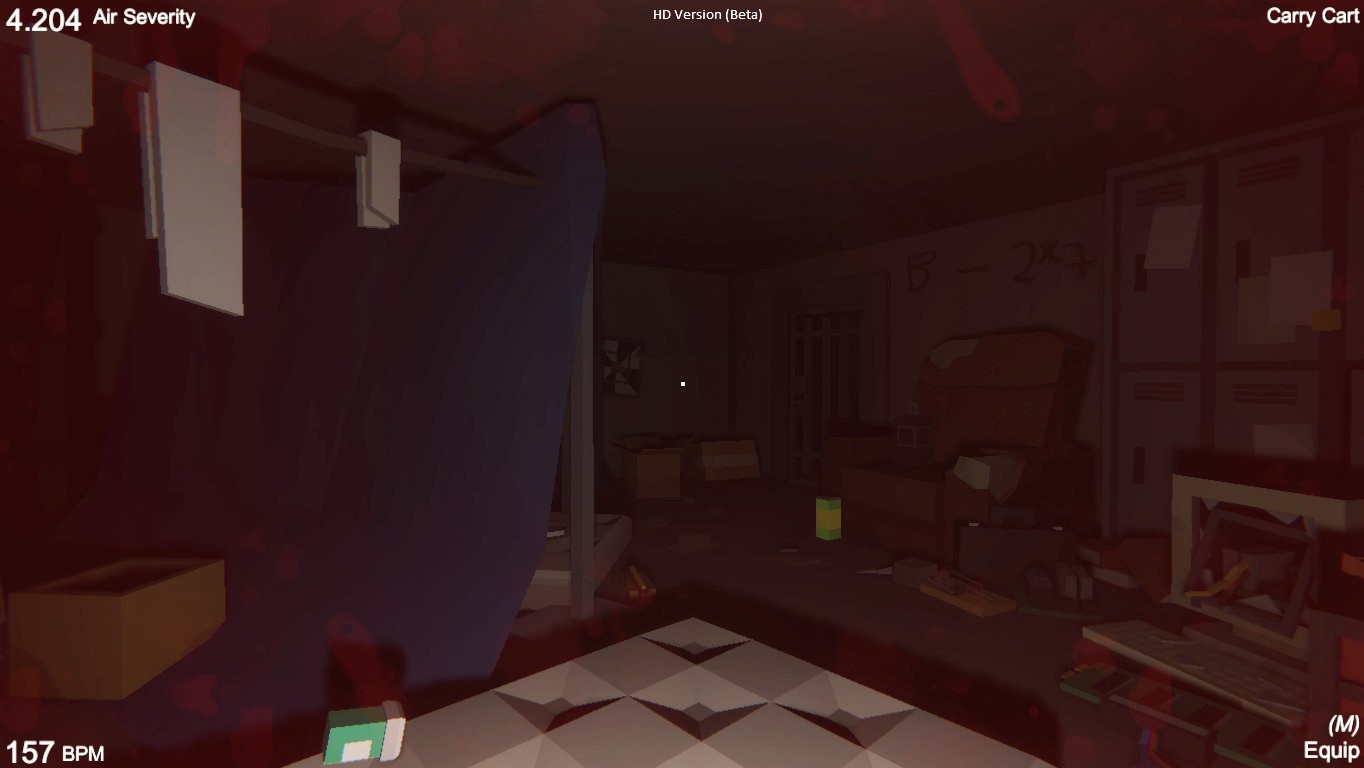
When a device's associated parts run low, the game reacts immediately. Power failures shut down lights, oxygen drops trigger atmosphere effects - tweaking player stats, and every material with lighting support has parameters for “lights on” and “lights off.” Combined with fog, this simulates a powerless environment even on static, pre‑lit levels.
Every vessel container type includes its own tooltip, dedicated HUD elements, and optional tutorials accessible through the 3D tablet, keeping the player informed without breaking immersion.
Player Inventory
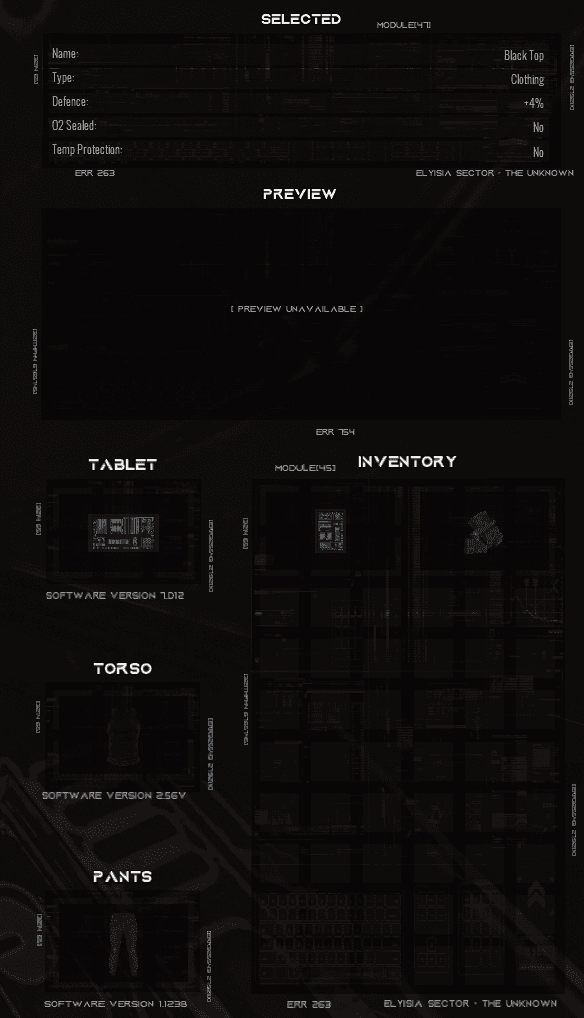
The player inventory uses the same unified system as the vessels. Outfits can be equipped directly, dynamically swapping the player’s clothing on the mesh. Equipment like the tablet, spacesuit, and flashlight only function when they’re actually slotted, keeping gameplay tied directly to what the player is carrying. The Player can go as far as looting entire storage container items, which have a unique stacked inventory menu each. Although not shown in the image below.
Containers & Loot
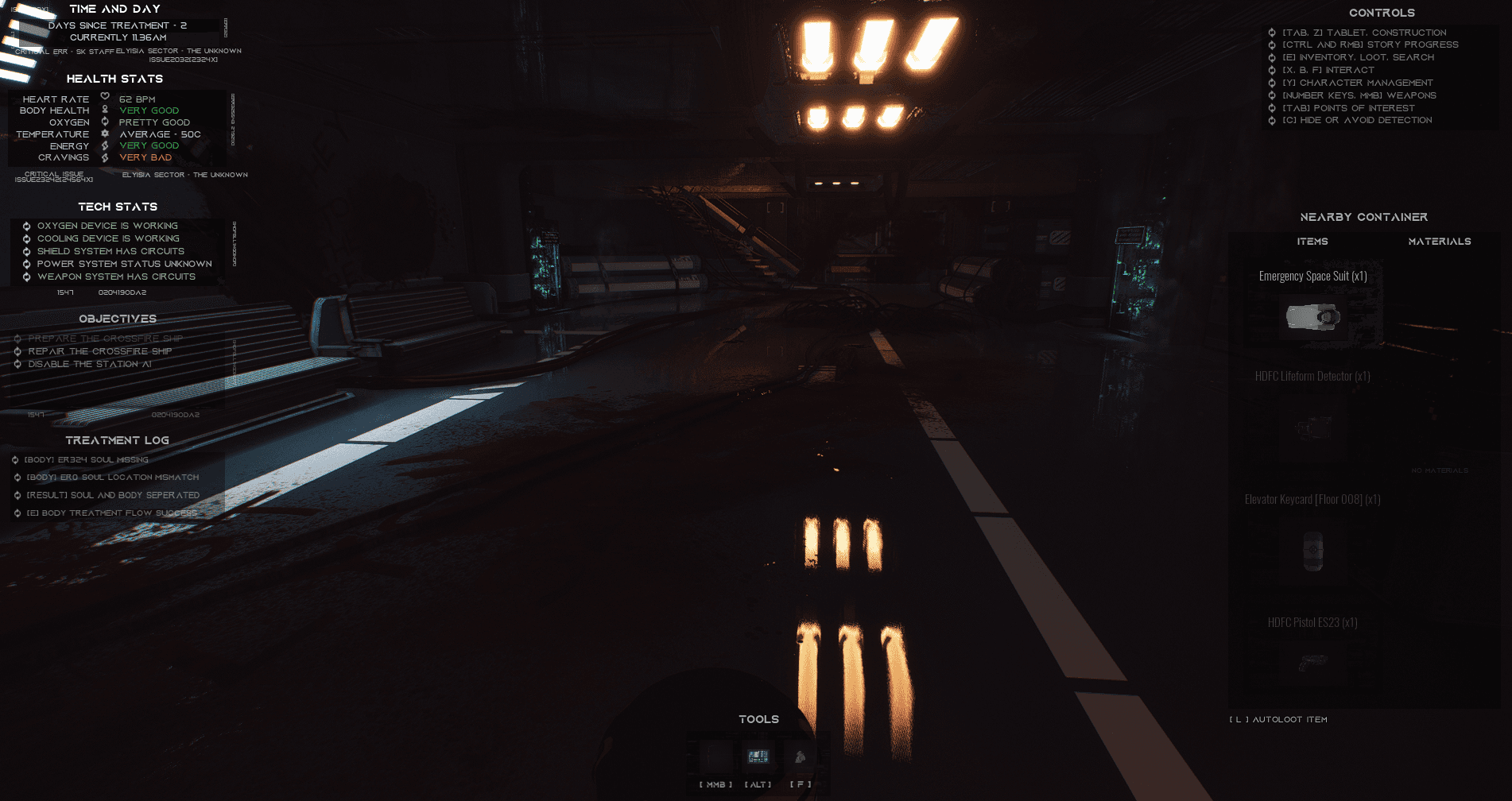
Loot is randomly generated from a database of 300+ items spread across eight rarity categories. Each loot container also has a chance to include materials, which fall into seven different types, or construction parts used for building with NPCs. The mix keeps every container unpredictable and gives players a steady flow of resources for crafting and progression.
Materials System
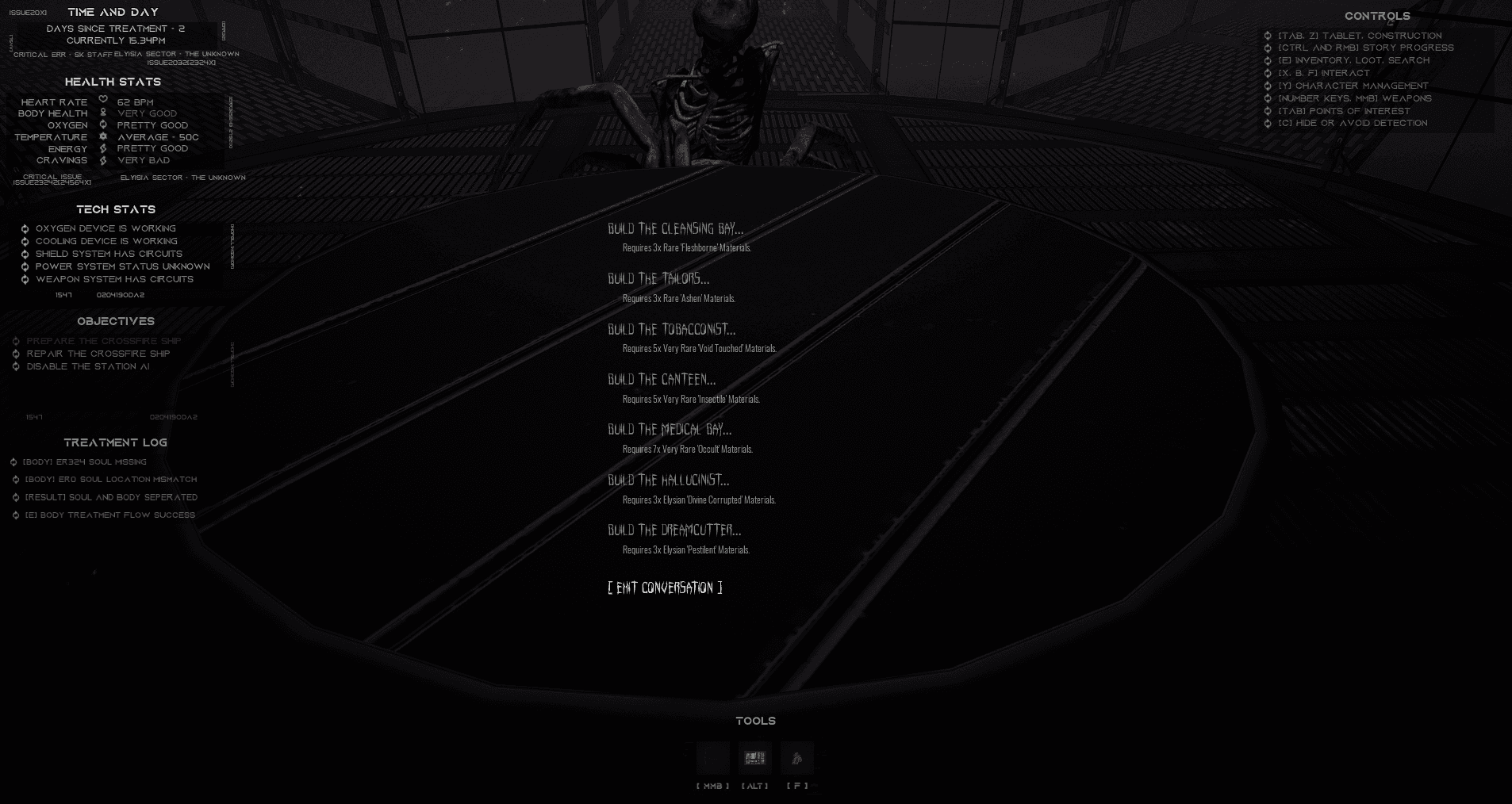
The materials system pulls from a large database of several hundred IDs. Each resource type is split into seven sub categories with different rarity levels, completely independent from regular items. These materials are far more valuable, and vendors can offer major gameplay benefits in exchange for them.
Every material name is generated through a formula that combines its type, rarity, and value, giving each one a unique identity. Certain rooms even support a lootbox style mechanic, letting players trade materials for a random loot container.
All of this feeds into the system’s ultimate reward: Souls, a high tier currency planned for unlocking future maps from Soulchaser.
Vessel Inventory
The entire inventory runs on a single unified system that every vessel can access, whether it’s the full HDFC Station or the Crossfire Ship. Each vessel includes devices like the oxygen system, cooling system, power system, and the (currently disabled) weapon, defence, and shield systems. These devices add or remove items dynamically in the background using data only, so no performance impact.
When a device's associated parts run low, the game reacts immediately. Power failures shut down lights, oxygen drops trigger atmosphere effects - tweaking player stats, and every material with lighting support has parameters for “lights on” and “lights off.” Combined with fog, this simulates a powerless environment even on static, pre‑lit levels.
Every vessel container type includes its own tooltip, dedicated HUD elements, and optional tutorials accessible through the 3D tablet, keeping the player informed without breaking immersion.
Player Inventory
The player inventory uses the same unified system as the vessels. Outfits can be equipped directly, dynamically swapping the player’s clothing on the mesh. Equipment like the tablet, spacesuit, and flashlight only function when they’re actually slotted, keeping gameplay tied directly to what the player is carrying. The Player can go as far as looting entire storage container items, which have a unique stacked inventory menu each. Although not shown in the image below.
Containers & Loot
Loot is randomly generated from a database of 300+ items spread across eight rarity categories. Each loot container also has a chance to include materials, which fall into seven different types, or construction parts used for building with NPCs. The mix keeps every container unpredictable and gives players a steady flow of resources for crafting and progression.
Materials System
The materials system pulls from a large database of several hundred IDs. Each resource type is split into seven sub categories with different rarity levels, completely independent from regular items. These materials are far more valuable, and vendors can offer major gameplay benefits in exchange for them.
Every material name is generated through a formula that combines its type, rarity, and value, giving each one a unique identity. Certain rooms even support a lootbox style mechanic, letting players trade materials for a random loot container.
All of this feeds into the system’s ultimate reward: Souls, a high tier currency planned for unlocking future maps from Soulchaser.
Vessel Inventory
The entire inventory runs on a single unified system that every vessel can access, whether it’s the full HDFC Station or the Crossfire Ship. Each vessel includes devices like the oxygen system, cooling system, power system, and the (currently disabled) weapon, defence, and shield systems. These devices add or remove items dynamically in the background using data only, so no performance impact.
When a device's associated parts run low, the game reacts immediately. Power failures shut down lights, oxygen drops trigger atmosphere effects - tweaking player stats, and every material with lighting support has parameters for “lights on” and “lights off.” Combined with fog, this simulates a powerless environment even on static, pre‑lit levels.
Every vessel container type includes its own tooltip, dedicated HUD elements, and optional tutorials accessible through the 3D tablet, keeping the player informed without breaking immersion.
Player Inventory
The player inventory uses the same unified system as the vessels. Outfits can be equipped directly, dynamically swapping the player’s clothing on the mesh. Equipment like the tablet, spacesuit, and flashlight only function when they’re actually slotted, keeping gameplay tied directly to what the player is carrying. The Player can go as far as looting entire storage container items, which have a unique stacked inventory menu each. Although not shown in the image below.
Containers & Loot
Loot is randomly generated from a database of 300+ items spread across eight rarity categories. Each loot container also has a chance to include materials, which fall into seven different types, or construction parts used for building with NPCs. The mix keeps every container unpredictable and gives players a steady flow of resources for crafting and progression.
Materials System
The materials system pulls from a large database of several hundred IDs. Each resource type is split into seven sub categories with different rarity levels, completely independent from regular items. These materials are far more valuable, and vendors can offer major gameplay benefits in exchange for them.
Every material name is generated through a formula that combines its type, rarity, and value, giving each one a unique identity. Certain rooms even support a lootbox style mechanic, letting players trade materials for a random loot container.
All of this feeds into the system’s ultimate reward: Souls, a high tier currency planned for unlocking future maps from Soulchaser.